
What would life look like if we could live it more than once? Would I have enrolled in a PhD after all?
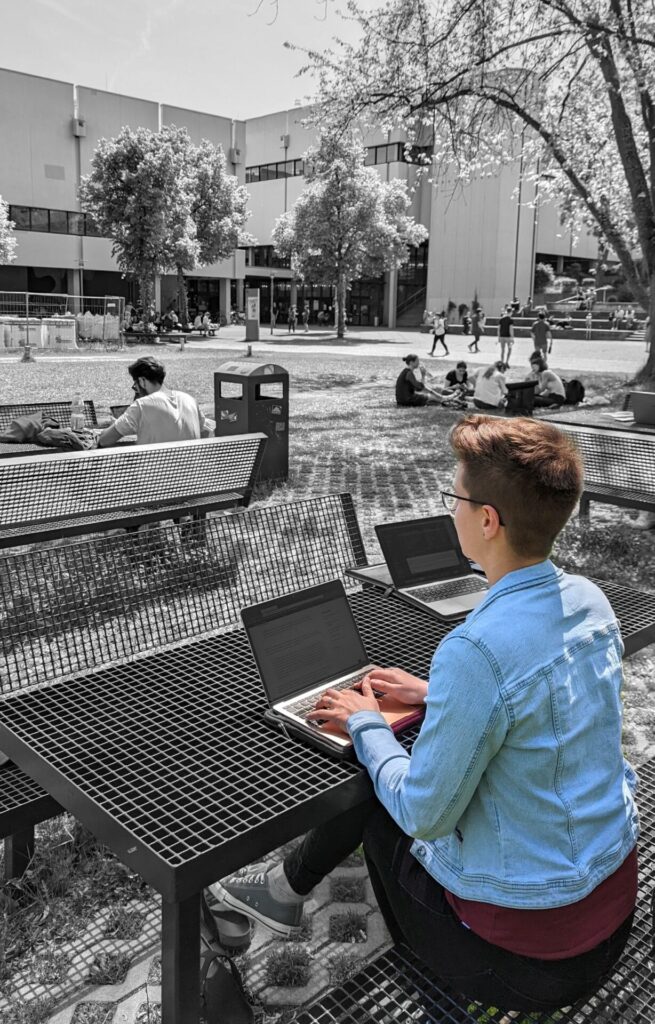
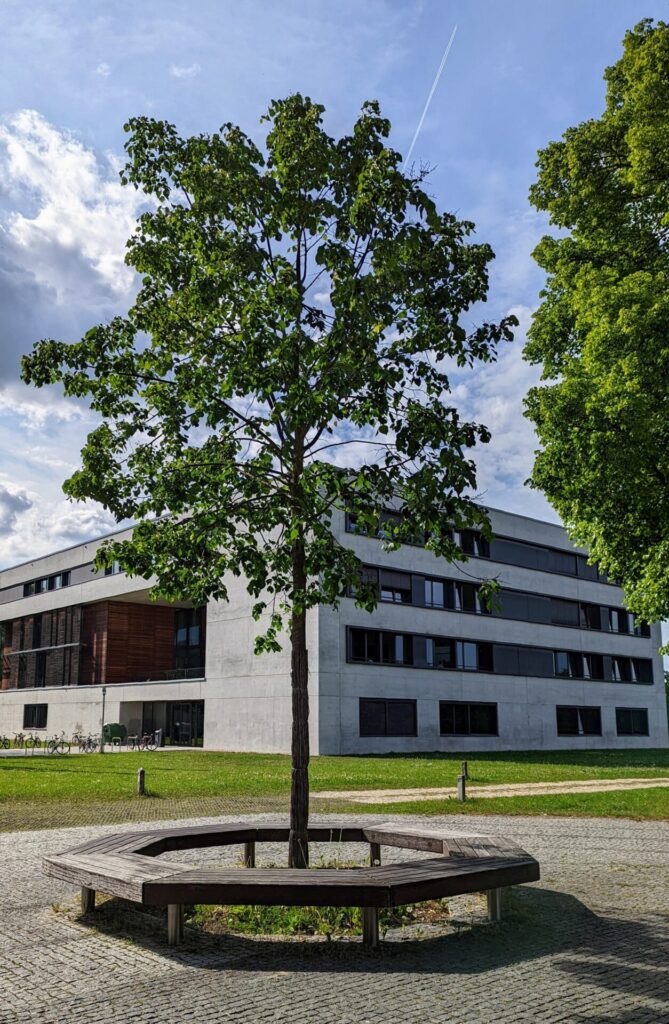
I’m sitting on a bench on the campus of the University where, three years ago (God, how has that much time already passed!), I successfully finished my beloved master’s degree. I can’t shake the feeling of how unchanged this place is, and how much I’ve changed in that same time.
These are the same benches where I sat a thousand times, worrying whether I’d finish my paper and hand it in on time, whether what I’d written was even any good or whether I’d missed the mark, not just on the topic but on life itself, whether I’d even manage to finish my degree, and a thousand other worries besides.
I look in through the library window, the one I spent hours and hours behind, reading, researching, writing.
And I see myself. Very clearly.
I see new lines from worry and stress.
I see doubt in my own mind.
I see a small smile too, from the moment I discovered something new.
But I deliberately turn my head the other way.
I keep looking at my laptop screen and typing these words. And that, right now, in real time, pulls a bigger smile out of me than the one on imaginary Mima’s face in that library.
And I can’t help but ask myself: do I miss that life?
Do I still want that life?
I often ask myself whether anything I do actually matters. And how different my life would be if I’d just done this or that differently.
Why do we hold this image of things that never happened as something that would surely give us that extra hit of dopamine? Why are we so sure that a life somewhere else, or with other people, would automatically bring us happiness?
I found the answer to that in Matt Haig’s “The Midnight Library”, which I read on the recommendation of my dear friend, Ana Brzaković. It’s one of those books that forces you to think about your own life, your choices, and the regrets that come with them:
“Do you ever think ‘how did I end up here?’ Like you are in a maze and totally lost and it’s all your fault because you were the one who made every turn? And you know that there are many routes that could have helped you out, because you hear all the people on the outside of the maze who made it through, and they are laughing and smiling. And sometimes you get a glimpse of them through the hedge. A fleeting shape through the leaves. And they seem so damn happy to have made it and you don’t resent them, but you do resent yourself for not having their ability to work it all out. Do you? Or is this maze just for me?” (Haig, 2020, Position 854-858)
The book’s central idea is that at the exact moment we’re least satisfied with the life we’re living, we get the chance to “try on” other lives, the ones we didn’t live. To look for happiness somewhere else. To “fix” our regrets. To try again and again, until we find “the right one”, the life that actually fits us.
But maybe the hardest thing to swallow is that we are exactly where we are because of the decisions WE ourselves made. No, nobody else is to blame for the “better” or “worse” lives we didn’t live, only our own decisions, and our own regrets.
Reading the book, I realized that no matter how dissatisfied I might be with some part of my life in a given moment, I still, definitively, wouldn’t trade it for anything in the world.
In my case, the films that play in my head are the worse lives I could have had, and how constantly unhappy, dissatisfied with myself and my choices I’d probably be, likely filled with regret and guilt.
Sometimes I wonder what my life would look like if I’d made different decisions.
If I’d never met Marko.
If I hadn’t enrolled in a master’s in Germany and moved here.
If we’d never had Sofka.
If I’d enrolled in a PhD…
And that’s where I trip.
Ah. So that’s where we are.
Everything I just listed fills me with something close to horror, because I don’t just not want to imagine a different life, I’m genuinely certain I would have been deeply unhappy if I’d stayed in Niš, if I’d never met Marko, if I’d never done my master’s, and (worst of all) if I’d never had Sofka!
Awful. Unthinkable.
Of course, the fact that I’m genuinely happy where I am pulls a smile onto my face, and yes, I can say I’m happy.
But still, sitting here carefree on campus and typing these words, I can’t help but wonder how my life would look if I were still a student, or a doctoral candidate. If I’d just continued with my academic education. If I still spent my days in the reading room, like before…
For a moment, I have to admit, that small worm of regret shows up.
Maybe it would have been nice…
And that’s exactly the trap of imagining “what didn’t happen.”
So I have to stop, go back, and think about why that is.
Setting aside every external factor (the visa, the finances, choosing a topic, the enrollment itself, and a dozen others that were all in play), I’m not living that life because I didn’t want to. Period.
In fact, just like the main character of the book (spoiler alert), I realized that version of my life would have belonged to someone else’s idea. Someone else’s expectations, which I had, very successfully, absorbed into what I thought I was.
I’m smart, I’m good at this, I can do it.
I can. But do I want to?
For the first year after I finished my studies, the whole campus looked so gray, so sad, so foreign to me.
I was in total limbo: no longer a student, and yet still here. Like an alien dropped into some parallel reality.
Maybe it would still be nice if Marko and I could spend hours and hours together in the library again, each reading our own thing, and then trading notes afterward.
But yes, I’d also still be under an unbelievable amount of pressure and stress.
Of course I know a life free of stress and worry doesn’t exist.
Of course I believe you need to step outside your comfort zone and push the limits of what you thought was possible.
But!
I also believe there’s a “positive”, I’d almost say pleasant, kind of discomfort, one that pushes us in the right direction, that makes us push our limits and become better, learn more about ourselves, and work on ourselves.
And I’m always up for that kind of challenge, that kind of “jumping into the water.”
But we can’t forget there’s also the other kind of discomfort.
The kind that warns you, intensely, that something isn’t for you, that the bite is too big, that you simply shouldn’t be there. A kind of survival instinct, where your body keeps telling you run, and you just don’t listen.
How do you tell the difference?
How do you follow the “good” discomfort, while catching the bad one in time, before the “lion” of your own or someone else’s expectations eats you alive?
Honestly? It’s very hard.
It took me three years to figure it out and finally admit to myself that I simply don’t want to do a PhD. Because in my case, that’s a lion that’s eating me, and instead of running, I’m the one offering it seasoning to go with the meal.
Today the sun shines on those same benches, where a different version of me is sitting. One who doesn’t just accept that her student days are long over, but is actually glad they are.
And now it’s easier.
Sometimes it’s more important to understand what we don’t want than to know what we do.
And that’s okay.
Now I can breathe again. Because the chains I’d put on myself, apparently, were pressing down on me so hard that I felt bad, less worthy, like someone who’d failed, for far too long.
And what even is success? Who decides whether we’ve succeeded or failed? I won’t give you the answers to that. I’ll just warmly recommend you go look for them in the midnight library.
I love my life exactly as it is. And thankfully, I didn’t need Nora’s radical measures from the book to figure that out.
I don’t need a glimpse into “parallel” realities to appreciate what I have, because I built it slowly, deliberately, with full awareness.
Is there room to change, to keep working on it?
Of course there is, and that makes me happy. Because nothing is perfect, and nothing needs to be.
That’s the beauty of life, actually.
I like this version of myself better. She’s not perfect, but she’s good enough. With enough room left to become even better, for herself and for the people closest to her.
The point isn’t to accept things as given, but to accept what you have and change what you don’t like.
But I’m glad I’m on the other side of it now, that I no longer carry the weight of exams, books, papers.
Now I worry about other things, but the most important part of the process is not mourning what was, or what might have been. I chose for it not to be, and that’s not just my power, it’s a reflection of my freedom. As Marčelo put it, in what I think is the best song on his latest album: “I open the door to my bunker, and I breathe.”
Whether that’s a sign of growing up, or the exact opposite, I don’t know.
One thing’s certain: now, with a smile on my face, I look at these familiar buildings, at these new young faces, put a period on this story, close my laptop, and move on.
Warmly,
S-Mama


Leave A Comment