
Since books hold a special place in our lives and since I’ve been covering ecological topics on this blog for a while, it was only a matter of time before they came up – my beloved books. This isn’t a classic environmental text; instead I’ll try to briefly walk you through the advantages and disadvantages of both printed and electronic books.
As someone who uses both every single day, and as someone who has done detailed theoretical and practical research into the real pros and cons of both formats, I feel both qualified and obliged to lay them out for you.
The Feel of a Book in Your Hands
Printed books are (after my family) my greatest love – and I won’t bore you too much with that. In brief:
It’s true that nothing in this world can replace the smell of printed paper, or the feeling of a book in your hands.
Printed books are timeless and have been around for centuries – and no, they won’t disappear.
And we shouldn’t overlook the objective feeling of knowing how far along you are when you hold a book in your hands – something that’s simply absent from electronic editions.
As for the advantages of e-books – yes, they exist too. Above all, a huge number of books fit into a very small space (your e-reader, phone, tablet, or laptop).
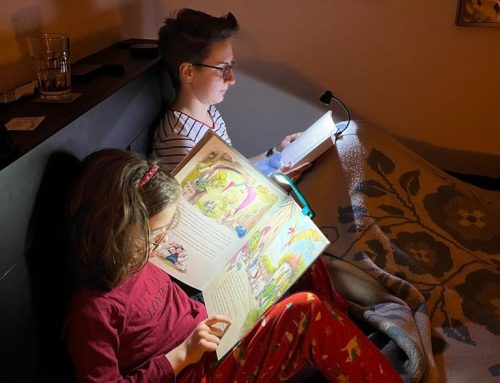
They’re always with you without weighing you down. You can read them even when a room is dark or the light is poor.
They’re easy to access (which doesn’t mean they’re cheaper – there are laws regulating that the price of a printed book must be equal to or very close to the electronic version).
Ecology? Not Quite So Black and White.
The biggest confusion arises around the ecological question for both sides.
Yes, printed books are made from wood. But on the other hand, paper is the most recyclable material of all – on one hand, it’s strictly regulated which trees can be used to make books, and on the other, the emission of harmful gases is far lower than with some other raw materials that are recycled. On top of that, more and more publishers are printing exclusively on recycled paper, so one could poetically say that a book has many lives before and behind it. Ecologically speaking, printed books are quite defendable.
On the other side we have electronic books. True, a huge number of books fit onto a small device – but we have to ask ourselves: what is that device made from? And how is it charged?
For one thing, no methods have yet been found for recycling electronic devices (including e-readers) in a truly “painless” way. Then there’s the problem that if you store your e-books on any cloud, that doesn’t mean they’re actually floating in the air – they’re sitting on one of many enormous servers, which both consume excessive electricity and are themselves not made from recycled materials.
Think carefully before you go on the defensive for either side.
I would rather say it’s a matter of personal preferences and habits. That’s the only fair thing to say.

My Personal Compromise – Both Together.
Since I don’t live in Serbia but love reading in my mother tongue, the options for getting printed books in Serbian are of course very limited.
On the other hand, as someone who works in research, I read a large number of books in digital form too. Above all, it’s impossible to carry all the books you need to the library every day – there are simply too many and they’re too heavy.
A large part of the books I need can’t even be taken out of the library at all, which is why it’s so much easier to scan the necessary chapters and read them at home on a tablet or laptop.
Scanning is practical for another reason too: while reading scanned material, I immediately mark and copy selected quotes into the software I use. This saves me time when writing, because I don’t have to transcribe the quotes again separately.
Another advantage of scanning: when I use books borrowed from other libraries around Germany, I scan them once – and can use them again whenever I need them. And trust me, that happens far more often than you might expect.
Books that I know I’ll need multiple times and that are generally important for my research field, I always try to buy and have in my personal library. Sometimes those are new books, and very often second-hand ones in excellent condition (another round of applause for Amazon and the other sites that enable fast and affordable delivery of books from anywhere in the world).
Perhaps the least important argument last: you genuinely don’t need all books in printed form, because realistically some are read once and never again – and some you regret having read even that once, so why should such a book take up space on your (already overflowing) shelf?
What Matters Is Reading
Then again, you can’t read only “quality” literature all the time – we’re only human. It’s nice sometimes to read a “beach read” by Sophie Kinsella and have a good laugh. But do I need to own it? Not really. That’s exactly when an e-book is the right choice. It can be deleted without guilt once you’ve finished, rather than – God forbid – throwing away the printed copy. (Though a printed book can always be gifted, donated, or borrowed from the library – but more on that another time.)
Whether you’re a champion of printed or electronic books – I respect your choice.
As for me, I can’t be two-faced and say one is better than the other, or – God forbid – that one will kill the other. Both have their advantages, and their obvious drawbacks. What matters is reading.
S-Mama


Leave A Comment