
The person who motivates me every single day is definitely S-Dad. Read about his journey from someone who despised gyms to someone who can’t wait for his next workout, and what all of this has to do with how well we think, in this rather unusual conversation.
If you have ever read S-Mama Blog, you can’t possibly not know who S-Dad is, so I won’t spend too long introducing him this time.
Since I only started training seriously myself when things got really tough (in my head, if I’m honest), it was very important to me to share this good experience with the most important person in my life. For more than a year I tried to persuade Marko to come to the gym with me, so he could feel for himself how good exercise is not just for the body but also for the mind and for concentration. To say it didn’t work would be an understatement. So I gave up on the idea completely.
But as so often in life, until you feel something yourself, you can rarely be convinced of something that goes against your views.
And that is how Marko started training.
He didn’t go to the gym, but because his job demands above all a sharp mind, he finally decided to do something physical, something more than just riding his bike.
It really was strange to interview the person I share my life with, who also happens to be a co-author of this blog, but we thoroughly enjoyed our “official” conversation and we hope you will too.
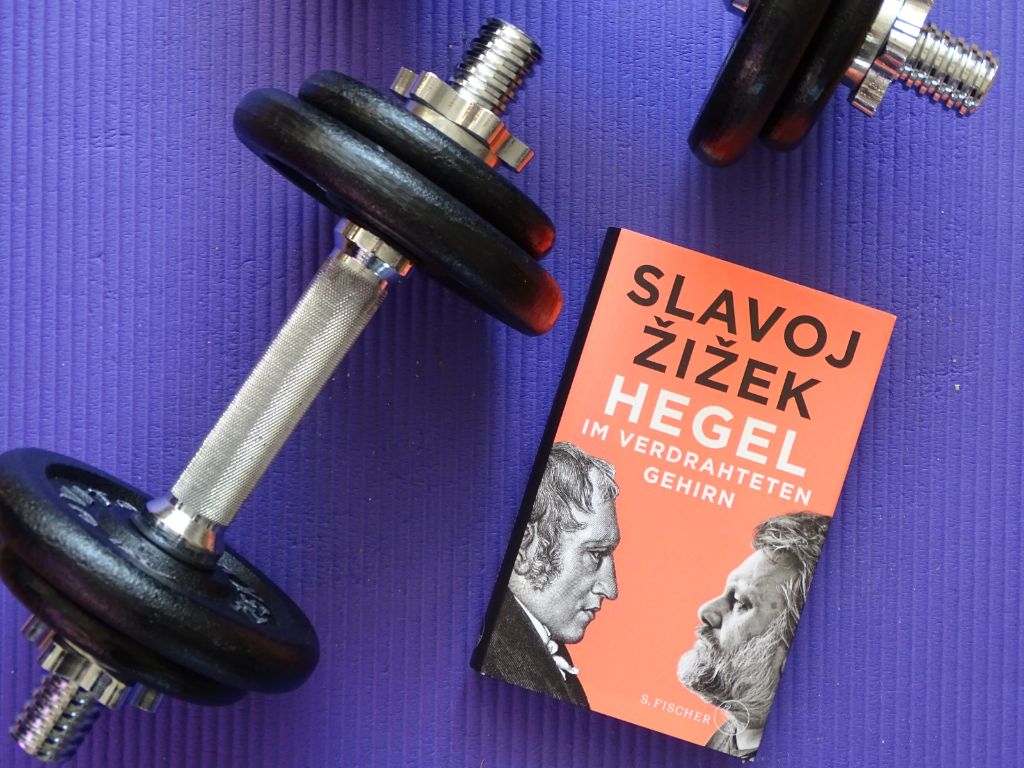
After almost a decade without training, why did you decide to get active again now, and regularly?
The first time I consciously became active was when I was studying for exams during my bachelor’s degree in Belgrade. I found my motivation in the words of a thinker who lived in Greece 2,400 years ago, the teacher of Alexander the Great and the most influential philosopher of all time, Aristotle. He stressed how important it is to find balance and the golden mean in everything, and so also in the activity of both mind and body.
Because our ability to think is closely connected to our body, in fact undeniably dependent on it, physical and mental activity should be balanced and in proportion if we want to keep the mind flexible.
Something just clicked, and during that period I started cycling regularly, which really saved me from a lot of emotional frustration and gave me some self-confidence.
My master’s studies in Germany brought a different pace and a different way of life. Especially once Sofia came into our lives, everything became hectic. Between studying, earning money and looking after Sofia and our dog Beni, it was very hard to find time for any sport.
And the little free time I did have, I preferred to spend with Mima rather than lifting weights, running or swimming. It’s not that I never tried to exercise, but I found it either boring or exhausting.
The turning point came in September 2020. After a month of sitting at my desk in vain, trying to write the concept for my PhD and a research paper on top of that, I realised that my deadline was in 20 days and that I urgently had to do something to turn things around if I wanted to stay on the path I had chosen and had been trying to clear for a good fifteen years.
In those days we (you and I 🙂) happened to be watching the “ads” of a well-known Serbian fitness coach, Milan Jovanović Strongman, who offers a nutrition plan and workouts through an app. The whole programme costs a fair bit, but I thought that Strongman had achieved remarkable success in bodybuilding, and that paying a little more would oblige me to work hard and not give up so easily.
How soon did exercise start to affect your mental performance, and how?
The results really started coming quickly. I decided not to weigh myself before and after, so right now I have no idea how many kilos I have lost. What matters to me is how I look to myself in the mirror and how I feel in my own body.
I don’t want to compete with the scales or give them that much importance.
After changing my diet and cutting out sugar (sweets, alcohol, fruit) and carbohydrates (white flour, pasta, potatoes and so on), I felt a change within seven days. My T-shirts fitted again or were even a little loose, and that meant a lot for my self-confidence.
And self-confidence is the key to everything. Without it there is no progress, not even in the simplest things like cooking, let alone in science. 😊
Be that as it may, within three weeks I managed to write both the exposé for my PhD (and believe me, that is one of the hardest things there is) and my first research paper, in a language I don’t speak all that well, and best of all, my supervisor rated both texts as excellent!
The credit really goes to the fact that I started to feel better in my own body, which was certainly thanks to regular workouts and a change in diet.
Why is working out at home more appealing to you than going to the gym?
This question was very important to me when I started looking for a way out of my supposedly hopeless situation. Gyms and fitness centres generally irritate me and I don’t feel comfortable there.
My first encounter with a gym wasn’t promising either. The first time I went to a gym in Belgrade, a guy who worked there (I wouldn’t call him a trainer) immediately pounced on me and started telling me, a complete beginner, that I mustn’t smoke, drink alcohol or coffee, that I had to eat who knows how much chicken a day and train who knows how many times a week… I ran for my life and somehow got over the 1,000 dinars I had already paid.
Babies are given small bites and light food at first, and then that gradually changes. You have to start with small things in order to eventually get to big ones. Or, as one of the richest people in the world, Amazon founder Jeff Bezos, put it: “Big things start small.”
Since my job and my PhD take up quite a lot of my time, the mere thought of another obligation like going to the gym, which would take at least two hours out of the little time I manage to spend with my family, is really hard for me. That is why working out at home was the ideal solution.
There are many advantages: I don’t depend on anyone or on anybody’s opening hours (Strongman updates my plan as soon as I finish my workouts, without me having to remind him), while I train I can often watch or listen to something together with Mima (that is, with you), the shower is five metres away and the bed even closer! True, I had to buy weights, but that is a short term investment that pays off in the long run.
Books or weights?
Trainers often say there is no excuse for not being active, but they rarely connect nutrition and exercise with reading and mental self-improvement. What is your experience, as someone for whom a book has always been a better friend than weights, yet whom those very weights helped to become a more productive researcher?
First of all, I react to statements like that in exactly the opposite way, and I think such all-or-nothing statements are completely counterproductive. For fitness trainers there really is no excuse not to be physically active, but for us ordinary people that absolutely doesn’t have to be the case. A trainer can certainly offer good arguments and convince me that physical activity is essential, but I always reserve the right to say that reading books is also an essential activity, one that “builds” the mind and spirit. As I said at the beginning, balance is what matters most.
Both the mind and the body need training.
What convinced me most about my coach Strongman was that he keeps educating himself, reading, writing, filming, travelling… Since I am a historian myself, I loved his short YouTube videos about historical topics and figures. Of course not every trainer has to be highly educated, but I think it matters that every trainer reads a bit and knows a little more at least about how the human body works, which muscles and bones exist (apart from the ones we all know), how modern diets affect our bodies and our thinking, and about methods of working and of approaching people.
It isn’t enough to know that the human body has “back, chest, arms, stomach and legs” and to give exercises for those parts. At the very least there is also the head, whose main “muscle” is called the brain, and it needs training and exercise too 😊
S-Mama and S-Dad

Leave A Comment